
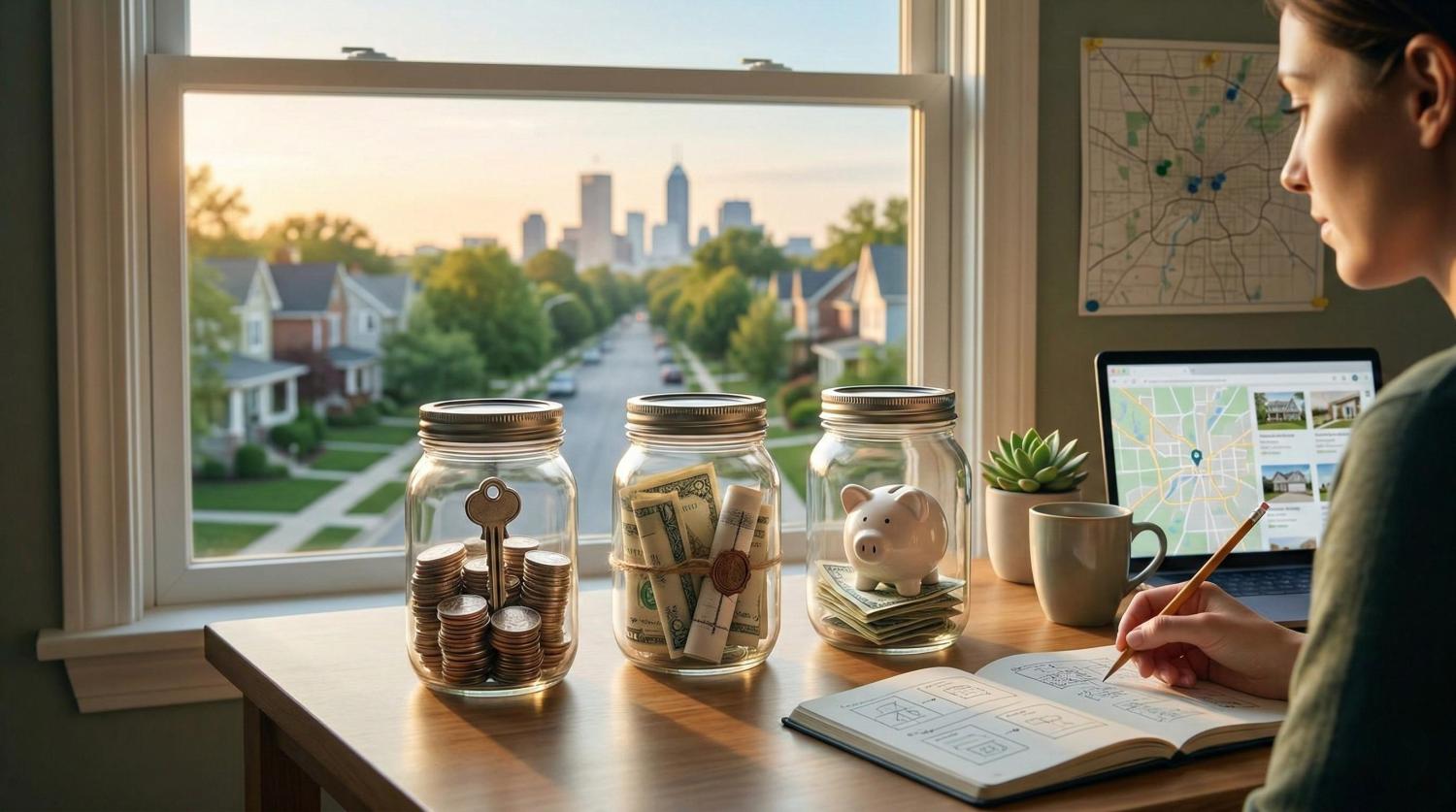
What You Actually Need Saved to Buy a Home in Indianapolis
If you’re thinking about buying a home in Indianapolis, one of the first questions that usually comes up is also one of the most stressful:
“How much money do I actually need saved?”
You’ll hear a lot of conflicting answers. Some people say you need 20% down. Others say you can buy with almost nothing out of pocket. Both statements can be true in very specific situations, but you need a plan that's right for YOUR situation.
Let’s break this down in a clear, practical way so you can understand what buying a home in Indianapolis really looks like from a savings standpoint.
The Three Buckets of Money Buyers Need
When people think about saving to buy a home, they often focus on just one number. In reality, there are three separate buckets you need to plan for.
1. Down Payment
Your down payment is the portion of the purchase price you pay upfront.
In Indianapolis, many buyers are surprised to learn that 20% down is not required.
Depending on the loan type, down payments commonly look like:
0–3.5% for certain first-time buyer or specialty programs
3–5% for conventional low-down-payment loans
10–20% for buyers who want lower monthly payments or have specific financial goals
The right number is simply about what fits your overall financial picture and comfort level. This is why it's HUGE to talk with a trusted, local lender right away in your process. [We can recommend someone GREAT if you don't know anybody.]
2. Closing Costs
Closing costs are separate from your down payment and often overlooked.
These typically include:
Lender fees
Appraisal
Title and escrow services
Government recording fees
Prepaid items like homeowners insurance and property taxes
In the Indianapolis market, closing costs often run around 2–3% of the purchase price, though the exact number varies. Another chance to talk with your lender about YOUR situation, and what your closing costs will look like.
In some cases, buyers may negotiate for the seller to contribute toward closing costs, but that depends on market conditions and the structure of the offer. Our team can advise you through those details.
3. Cash Reserves
This is the bucket buyers forget about most, and the one that creates the most stress later if it’s ignored.
Cash reserves aren’t always required by lenders, but they matter.
Reserves help cover:
Unexpected repairs
Utility deposits
Moving expenses
A financial cushion during the first few months of homeownership
Even a modest reserve can make the transition into homeownership feel far more stable. Discuss this number with your lender, for the best info.
So… How Much Do Buyers in Indianapolis Typically Need Saved?
There’s no single “right” number, but most Indianapolis buyers we work with tend to fall into a realistic range, depending on price point, loan type, and personal comfort.
Rather than thinking in absolutes, it’s more helpful to think in ranges:
A lower-out-of-pocket path that prioritizes getting into a home sooner
A middle-ground approach that balances savings and monthly payments
A more conservative approach with stronger reserves and flexibility
What matters most is that your plan aligns with your income, lifestyle, and long-term goals, not a generic rule of thumb you heard online.
What This Means If You’re Buying in Indianapolis
You may not need nearly as much saved as you think to get started
Your total savings plan should include more than just the down payment
The best strategy depends on your comfort with monthly payments and reserves
Talking with a trusted local lender is your BEST move
Early planning gives you options, which will reduce stress
Buying a home is a huge financial decision, but it’s also a huge lifestyle one. The goal is to buy in a way that feels financially sustainable for you for the long haul.
A Calm Way to Think About the Next Step
Instead of asking, “Do I have enough?” a better question is:
“What buying strategy makes sense for my situation?”
Once you understand the full picture [down payment, closing costs, and reserves] the process usually feels far more manageable than buyers expect.
Every home and every financial situation is different. If you want to talk through what this might look like for you specifically, we’re always happy to help.